
About SEWA Cooperative Federation

History

The history of the Gujarat State Women’s SEWA Cooperative Federation is rooted in SEWA’s dual strategy of struggle and development. Since SEWA’s inception as a trade union in 1972, its members – marginalised, self-employed women workers in the informal economy – have fought for their rights and recognition (struggle), while simultaneously building their own alternative institutions for livelihoods and social security (development).

Out of this dual approach grew the cooperative movement within SEWA. Informal women workers across diverse trades began organizing themselves into cooperatives. These cooperatives created fair and dignified employment and also addressed women’s specific needs for sustainable livelihoods, collective bargaining power, and access to markets and capital.

By the early 1990s, it became clear that while each cooperative was rooted in its own trade, they all faced common challenges: managerial capacity, financial sustainability, and access to larger markets. In April 1992, more than 900 women leaders from SEWA cooperatives came together in Ahmedabad to present these issues to the Union Minister of Cooperatives. Their demand was clear: women-led cooperatives needed a collective institution of their own to strengthen, support, and sustain them.

Thus, on 31st December 1992, the Gujarat State Women’s SEWA Cooperative Federation was born – the first women’s cooperative federation in India.

Since then, the Federation has carried forward SEWA’s values of integrity, social justice, communal harmony, and simplicity. It has worked to empower women’s cooperatives not just as economic enterprises but also as vehicles of social change – embodying SEWA’s vision of “struggle and development” for informal women workers’ full employment and self-reliance.

Today, with over 32 years of collective action, SCF continues to build a strong ecosystem for women’s cooperatives.

Our Mission

Holistic empowerment of informal and self-employed women workers, within collectives and co-operatives.

Our Vision

To work with collectives that are run by, with, and for informal women workers to help them achieve full employment and self-reliance at the collective and the member level.

Elaben Bhatt’s Legacy

Late Smt. Elaben Bhatt, our founder, believed in “Anubandh” – the interconnectedness of all life. Her vision of collective strength continues to guide our work, reminding us that women’s economic empowerment is inseparable from social justice and community well-being.

Our Values

Our WESS Model of Work

SEWA Cooperative Federation is a secondary-level cooperative that works as a Women’s Enterprise Support System (WESS). Our role is to strengthen the shared systems that informal women workers’ collective enterprises need to grow, to sustain themselves and respond to change on their own terms.

As a WESS, we operate as a connective layer. We support leadership development, enterprise planning, financial systems, and visibility, while also engaging with institutions and policy spaces that influence how cooperatives function. This helps women’s collective enterprises respond to markets and regulation carrying that burden alone.

We work with long-standing member cooperatives as well as with collectives that are newly formed or in the process of revival. Support evolves based on where a collective is in its journey and on the priorities articulated by women leaders themselves.

Capacity Building

Leadership development, cooperative education, and enterprise skills rooted in lived experience.

Governance Support

Strengthening democratic processes, decision-making practices, and accountability within collectives.

Business Development

Supporting enterprise growth, market access, and viability across sectors.

Financial Management

Building systems for planning, sustainability, and preparedness in uncertain conditions.

Research and Advocacy

Documenting practice, generating evidence, and engaging in policy processes that affect women’s enterprises.

Communications

Supporting visibility, storytelling and collective voices at multiple levels.

Together, these elements form a support ecosystem that remains responsive to informal women worker’s realities and grounded in cooperative principles.

Trades of Our Cooperatives

SEWA Cooperative Federation is a federation of women’s cooperatives across diverse forms of informal work. These sectors reflect the realities of women’s labour—often undervalued, fragmented, and shaped by local conditions—but organised through collective enterprise.

Working across multiple sectors allows the Federation to learn how cooperatives function in different economic and social contexts, while remaining rooted in shared principles of ownership, democratic decision-making, and mutual support.

Today, the Federation works with women’s collective enterprises across the following sectors:

Land-Based (Agriculture & Allied)

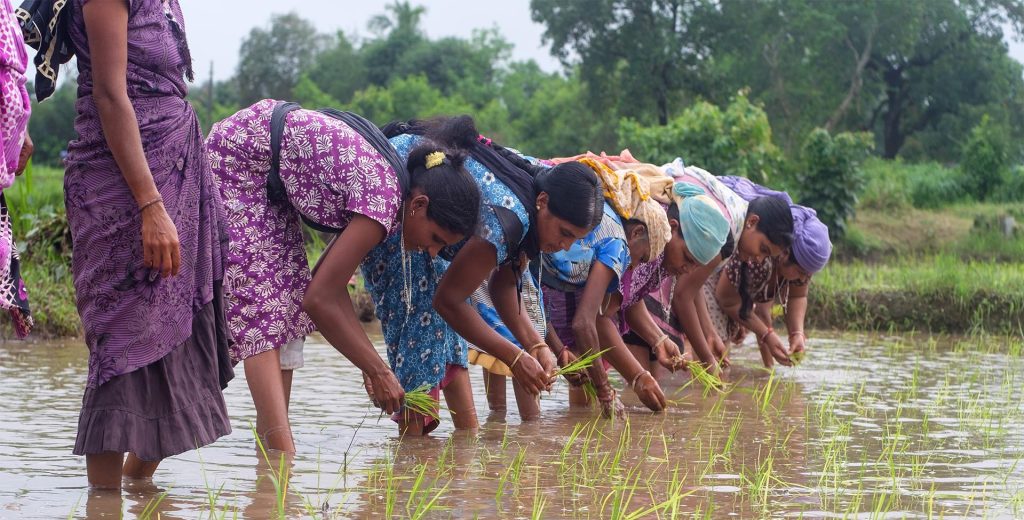
Women farmers and producers engaged in cultivation, allied activities, and agri-based enterprises, often navigating climate variability, input access, and market uncertainty.
Dairy

Women-led dairy cooperatives involved in milk production and related activities, balancing daily enterprise operations with collective management and leadership.

Handicraft

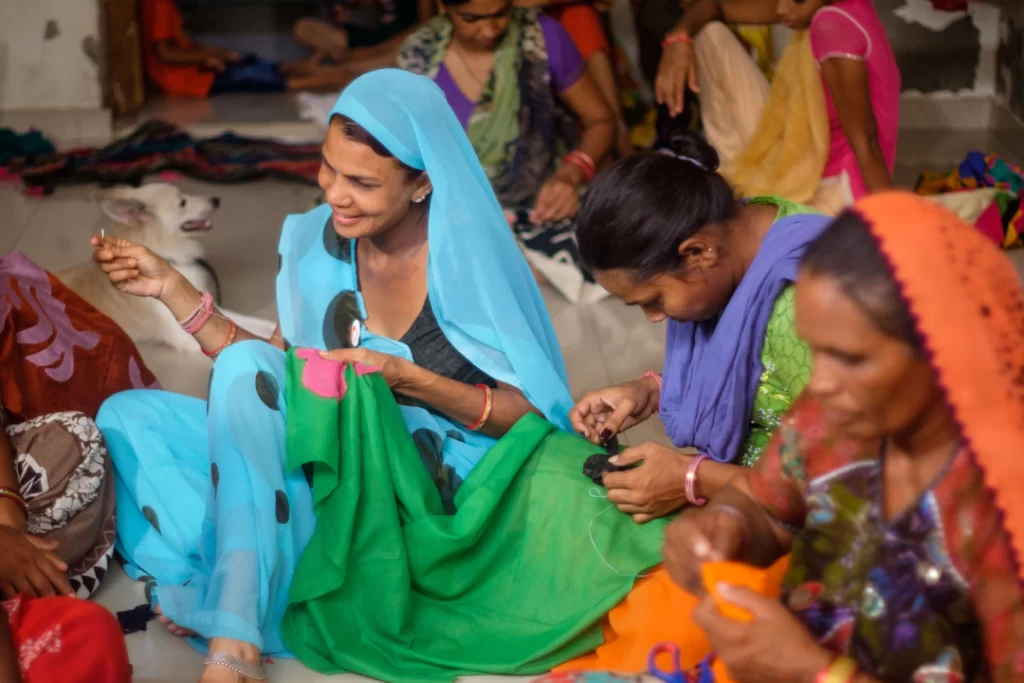
Artisan cooperatives engaged in traditional and contemporary crafts, where collective organisation supports production, quality control, and access to markets.

Care & Services

Women working in service-based cooperatives such as cleaning, childcare, and home-based services, organising work that is often informal and invisibilised.

Labour

Women workers in labour-intensive sectors, including construction and other forms of manual work, where cooperatives create collective identity and bargaining power.

Savings & Credit

Women’s financial cooperatives that support savings, credit access, and financial decision-making, strengthening economic security at the household and collective level.

Together, these sectors reflect the breadth of women’s work within the informal economy and the role of cooperatives in creating shared ownership, stability, and voice across different forms of labour.

Our Leadership

Our strength lies in informal women worker leaders who rise from the grassroots. Guided by experienced professionals, our team works shoulder-to-shoulder with women cooperative members.

Our Board Members

Miraiben Chatterjee (Chairperson)

Gujarat Women’s Lokswasthya SEWA Cooperative Ltd.

Ayeshaben Marfatiya

Abodana Women Handicraft Workers’s SEWA Cooperative Ltd.

Sarojben Parmar

Shree SEWA Homecare Women’s Cooperative Ltd.

Bijalben Brahmbhatt

Self Employed Women Nagrik Dhiran SEWA Cooperative Ltd.

Kokilaben Patel

Shobhasan Women’s Dairy Cooperative Ltd.

Lataben Gamit

Megha Indigenous Women Farmers’ SEWA Cooperative Ltd.

Shardaben Vaghela

Kheda Women Farmers Fruit and Vegetables Grower’s Cooperative Ltd.

Rupaben Aahir

The Motipipli Women’s Dairy Cooperative Ltd.

Daxaben Mehta

Gujarat Women Video SEWA Information and Communication Cooperative Ltd.

Jigishaben Maheta (Managing Director)

Gujarat State Women’s SEWA Cooperative Federation Ltd.

Jayrajben Vaghela

Pethapur Women’s Dairy Cooperative Ltd.

Jyotsanaben Parmar

Trupti Snacks Enterprise Women SEWA Cooperative Ltd.

Sadhanaben Parmar

Saundarya Safai Utkarsh Women SEWA Cooperative Ltd.

Mittalben Shah

Gujarat State Women’s SEWA Cooperative Federation

Anishabanu Bagban

Rachaita Women Construction Workers Cooperative Ltd.

Ranjanben Meraiya

Sangini Women Childcare SEWA Cooperative Ltd.