Over the years, one thing has become very clear to me. In our conversations with informal women worker-led cooperatives, members rarely speak about peace as an abstract idea.
Instead, they speak about whether work will continue through the next season. They speak about whether there will be someone to turn to when a family member falls ill. They speak about whether the cooperative can help them respond to an unexpected challenge. They speak about whether their children or ageing parents will be cared for while they work.
Listening to these conversations over the years has made me think differently about peace.
Every year, the International Day of Cooperatives invites us to reflect on the role cooperatives play in shaping our societies. This year’s theme, “Cooperatives for a Peaceful World”, is especially meaningful because it encourages us to look beyond peace as an idea and think about the conditions that make it possible.
At SEWA, we have long understood that livelihoods are valuable because they create security. Late Shri Elaben Bhatt often reminded us that economic security gives women the confidence to make choices, participate in decisions and live with dignity. Looking back, I believe this idea has shaped much of SEWA’s work over the past five decades.
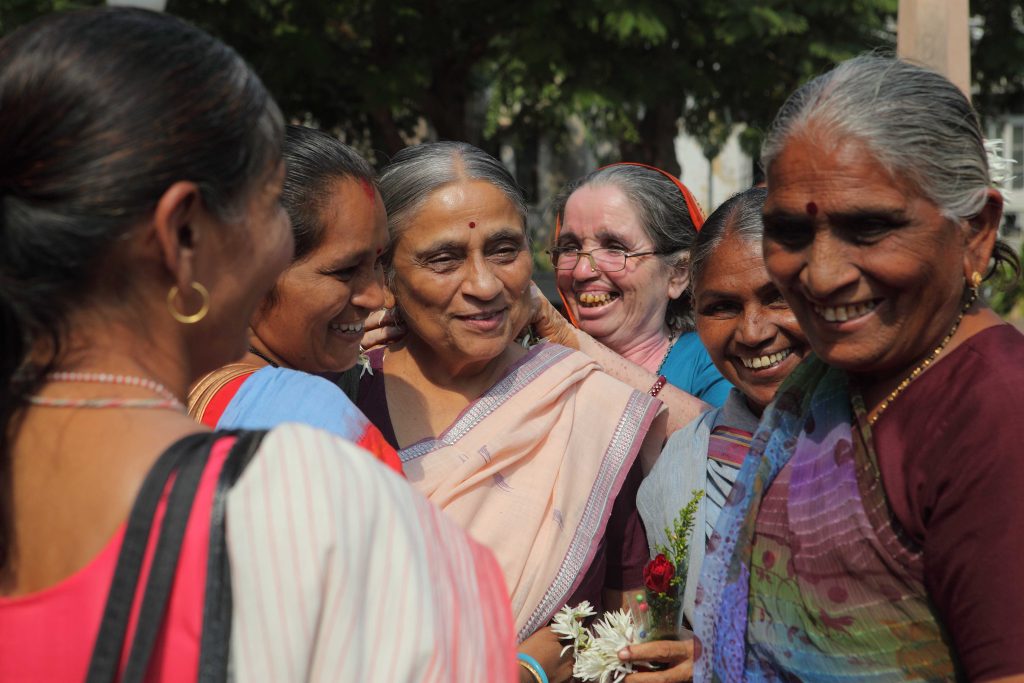
For women working in the informal economy, security begins with the ability to earn a dependable livelihood. It grows when that livelihood is supported by institutions they trust. Over time, those institutions create confidence that people will not have to face every challenge alone.
This confidence does not emerge on its own.
It is built through dependable institutions.
That is why cooperatives matter. Especially for informal women workers.
At SEWA Cooperative Federation, our experience over more than three decades has shown that cooperatives do much more than strengthen livelihoods. They help communities organise around shared needs. They create spaces where members make decisions together, review challenges together and find practical solutions together. They nurture leadership that remains within the community and strengthens institutions across generations.
These are quiet processes. They rarely attract attention. Yet they build something that every peaceful society depends upon: trust.
This understanding feels even more relevant today because the meaning of “security” is changing.
Climate events are becoming more frequent. Families are changing. Many households are caring for ageing parents while balancing work and other responsibilities. Traditional support systems are evolving, and communities are beginning to ask new questions about how care will be organised in the years ahead.
I believe this is another moment where cooperative thinking has much to contribute.
As the demand for care continues to grow, we will need institutions that people trust, participate in and strengthen together.
Our experience suggests that peace is sustained when people have confidence in the institutions around them. Confidence that they will be heard. Confidence that support will be available when it is needed. Confidence that solutions can be built collectively rather than individually.
Perhaps this is one way of understanding this year’s theme.
In an increasingly uncertain world, contributions of cooperatives may become more important than ever.
Jigisha Maheta, Managing Director